
Picking the right security camera system can feel like a big decision, and it genuinely is. The cameras you choose will shape how well you can monitor your property, respond to incidents, and deter problems before they start. Whether you own a home in Glendale, manage a retail location in Anaheim, or run a warehouse operation in the greater Los Angeles area, the basics of making a smart camera choice come down to a handful of practical considerations. We’ve been helping Southern California residents and businesses sort through these decisions since 1987, so we want to share what we know.
Start With What You Actually Need to Cover
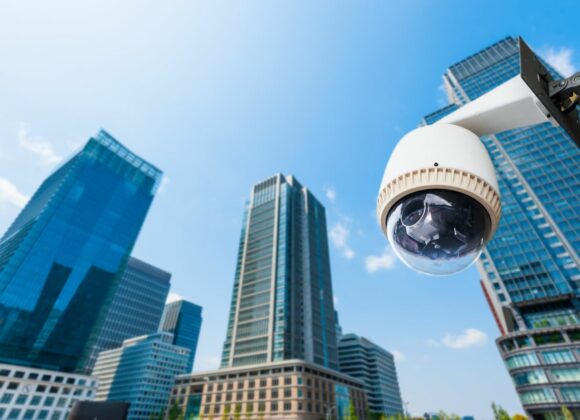
CCTV Camera or surveillance oeprating with building in background
Before you look at a single camera spec, walk your property. Count the entry points, note the lighting conditions, and think honestly about where a break-in or incident is most likely to occur. A homeowner in Torrance protecting a front door and garage has very different needs than a distribution facility in the City of Industry covering loading docks, parking lots, and interior corridors.
Outdoor cameras need to handle Southern California’s bright sun as well as low-light evening conditions. Indoor cameras can be smaller and more discreet. Wide-angle lenses work well for open areas; tighter fields of view are better for narrow hallways or focused monitoring of a cash register or server room. Get this picture clear in your mind first, and the equipment choices become much easier to make.
Resolution and Image Quality Matter More Than You Might Expect
A camera is only as useful as the footage it captures. Low-resolution images might confirm that something happened, but they rarely help identify who did it. High-definition CCTV cameras give you the detail you need, whether that’s a license plate in a parking lot or a face near an entry point.
For most residential installations, 1080p cameras strike a good balance between image clarity and storage demands. Commercial sites with larger areas to cover, or businesses that may need to share footage with law enforcement, often benefit from higher-resolution systems. We talk through these tradeoffs with every client, because more resolution also means more storage, and storage is something that needs to be planned for up front.
Think About Where Footage Is Stored and How You Access It
Modern security camera systems give you real choices about storage. Local storage using a digital video recorder keeps footage on-site and doesn’t depend on an internet connection. Cloud-based options give you access to footage from anywhere, which is especially convenient for business owners who travel or manage multiple locations. Many of our clients across Montebello, Van Nuys, and throughout the Los Angeles area prefer hybrid setups that give them both local redundancy and remote access.
Speaking of remote access, today’s systems can integrate directly with your smartphone or computer. Being able to pull up a live camera feed or review recorded footage from wherever you are adds a real layer of confidence. For businesses headquartered in Southern California with operations in other states, that kind of remote visibility across locations is genuinely valuable.
Don’t Overlook How the Camera System Fits Into Your Broader Security Setup
A security camera system works best when it’s part of a layered approach to protection. Cameras paired with a monitored burglar alarm create a much stronger response capability than either system alone. If an alarm is triggered, camera footage can tell our UL-certified central station exactly what’s happening in real time, which helps direct the right response quickly.
Access control systems are another natural complement. Knowing who entered a building and when, and having camera footage to match, gives you a complete picture rather than fragments. We design systems with this kind of integration in mind, which is part of why clients in Anaheim, Glendale, and surrounding areas have trusted us with both new installations and system upgrades for decades.
Verify Licensing Before You Hire Anyone
This one is worth saying plainly. California requires security contractors to be properly licensed, and not everyone operating in the market meets that bar. Our license numbers are ACO 7555 and C-10 1018244, and we’re happy to have that conversation with any prospective client. When someone is installing equipment that your family or your employees will depend on, you want to know the company behind it has the credentials and the track record to stand behind their work.
We’ve been doing this work in Southern California for well over three decades. That experience means we’ve seen what works, what doesn’t, and how security needs evolve over time. If you’re thinking about a new security camera system for your home or business, we’d love to help you figure out the right fit. Give us a call or drop us an email with any questions, and we’ll take it from there.