
Placing a surveillance camera in the wrong spot can give you a false sense of security. You see the monitor, the footage looks fine, and then something happens in a corner you never thought about. Getting camera placement right the first time is what separates a system that actually protects your property from one that just looks like it does. Whether you own a home in Monterey Park, manage a warehouse in Vernon, or run a commercial facility in the City of Industry, the principles are the same.
Start With a Honest Walk-Around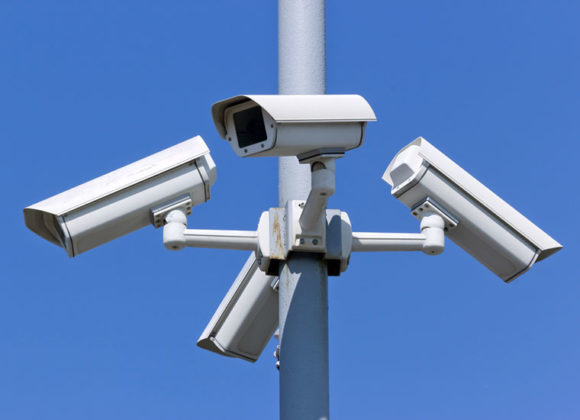
Before you mount a single camera, spend time walking your property as if you were someone who shouldn’t be there. Where would you approach from? Which doors and gates offer cover? Which corners of the parking lot or yard sit in shadow at night? Taking notes during this walk is more valuable than any spec sheet.
Pay particular attention to areas where foot traffic converges. Entry and exit points are obvious priorities, but don’t overlook side gates, loading docks, utility access panels, and stairwells. In commercial properties across Los Angeles and surrounding areas, these secondary access points are where incidents tend to happen precisely because they’re assumed to be covered when they’re not.
Think in Overlapping Fields of View
One of the most common mistakes we see is treating each camera as an isolated unit. A better approach is to plan your coverage so that adjacent cameras overlap slightly. If a subject moves out of one camera’s field of view, they should already be entering another’s. This overlap also gives you multiple angles on the same event, which matters a great deal if footage is ever needed for an investigation or insurance claim.
For outdoor coverage, aim cameras at a slight downward angle rather than pointing them straight out horizontally. You capture more of the ground plane where activity actually occurs, and you reduce the amount of useless sky in the frame. Height matters too. Mounting a camera somewhere between eight and ten feet off the ground is generally a good balance between a useful angle and a lens that’s difficult to tamper with.
Account for Lighting Conditions
Even the best camera produces poor footage in bad lighting. For properties in Alhambra and throughout Southern California, this often means thinking about direct sunlight during the day and near-total darkness in corners of a yard or parking structure at night. Pointing a camera directly into a bright light source, like a west-facing camera at sunset, will wash out the image entirely.
If adding external lighting isn’t an option everywhere, look at cameras with infrared night vision or low-light capability. Position those units in areas where artificial light is limited. For areas that do have lighting, confirm the camera’s field of view isn’t aimed at the light fixture itself. Illuminate the scene, not the lens.
Indoor Coverage Deserves the Same Attention
For residential clients and businesses alike, indoor cameras often get less thought than outdoor ones. Stairways, hallways, and main entry areas are the highest-priority spots inside. In a retail or commercial environment, you’ll also want coverage of cash handling areas, server rooms, and any space where valuable inventory is stored or accessed.
Dome cameras work particularly well indoors because the housing conceals exactly where the lens is pointed, which is itself a deterrent. Corner-mounted cameras in a room can cover the widest angle with the fewest units, reducing gaps significantly.
Don’t Let Technology Do All the Work
Camera placement is one piece of a layered security approach. At D&S Security, we’ve been helping homeowners and businesses build these layers since 1987. A well-placed CCTV system pairs naturally with burglar alarms, access control, and UL-certified central station monitoring so that if something does happen, a response is already in motion. For businesses headquartered in Southern California with operations elsewhere in the country, we can extend that same integrated approach beyond the local footprint.
Remote access through a smartphone or computer also changes how you interact with your cameras. You’re not just reviewing footage after the fact. You can check in on a property in real time, whether you’re across town or across the country.
If you’re not sure whether your current camera setup has gaps, or if you’re starting fresh and want to get it right the first time, we’re glad to help. Give us a call or drop us an email and we can talk through what makes sense for your specific property and situation.